The Drama of Salvation: Theology of Raymund Schwager SJ

Jan 20, 2026 | 3 comments

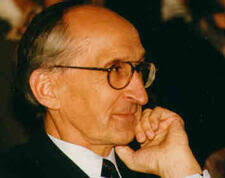
Raymund Schwager SJ – Theologian
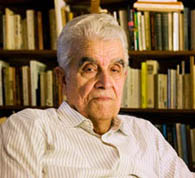
René Girard – Philosopher

Raymund Schwager SJ (1935-2004) was a close colleague and friend of René Girard – philosopher of violence. In close collaboration with Girard he developed an understanding of the Gospel as an ongoing drama in five Acts – a drama in which all of us are still involved.

It was to Schwager that Girard later attributed a famous change of mind. Arguing at first that the crucifixion was not a sacrifice he was persuaded by Schwager that Jesus had effectively changed the meaning of sacrifice – from the always evasive offering to God of some other person, or some other creature, into self-giving – the essential challenge to all Christians.

[While the content of what follows has been checked with other sources for accuracy, transparency requires that we acknowledge the AI Agent Copilot as the main immediate source for content and formatting. See the references at the base for the sources used by Copilot for this analysis.]

For Schwager violence arises when:
  • we fear losing our place
  • we imitate rivals
  • we seek approval
  • we accuse or defend
  • we hide from truth
The drama of salvation begins when the Kingdom of God that is offered by Jesus – on behalf of the Trinity – is assailed by the Accuser, Satan – who tempts us to disobedience and then sets out to undermine the Kingdom of God by attacking Jesus.


The Five-Act Drama of Salvation

🎭 Act I — Jesus Proclaims the Kingdom: Invitation Without Violence
Theme: God’s reign arrives as pure offer, without coercion.
  • Jesus announces the Kingdom as good news.
  • His healings, table‑fellowship, and exorcisms reveal a non‑violent divine initiative.
  • He calls disciples freely; no one is compelled.
  • Conflict is not yet central — the accent is on invitation, mercy, and openness.
This act establishes the non‑violent character of God and the freedom of the human response.
🎭 Act II — Rising Conflict: Human Resistance and Accusation
Theme: The drama intensifies as Jesus meets opposition.
  • Religious and political authorities begin to resist him.
  • Accusations emerge: blasphemy, Sabbath violations, demonic possession.
  • The satanic dynamic (accusation, rivalry, scapegoating) becomes visible.
  • Jesus responds with parables, prophetic critique, and non‑retaliation.
Here Schwager shows how human violence, not divine will, drives the conflict forward.
🎭 Act III — The Passion: The Climax of Human Violence
Theme: Humanity’s violence reaches its peak; Jesus refuses to mirror it.
  • Jesus is betrayed, arrested, falsely accused, condemned, and executed.
  • He does not retaliate or curse; he forgives and remains faithful.
  • The scapegoat mechanism is exposed: the innocent one is killed to restore order.
  • Jesus’ non‑violence reveals the Father’s non‑violence.
This act is the dramatic turning point: humanity acts violently; God does not.
🎭 Act IV — Resurrection and Forgiveness: God’s Counter‑Drama
Theme: God responds not with vengeance but with peace.
  • The risen Christ returns with forgiveness, not retribution.
  • He gathers the scattered disciples and restores communion.
  • The divine initiative overturns the logic of accusation and fear.
  • The Spirit is promised as the power of new life.
This is the moment where God’s drama interrupts and heals the human drama.
🎭 Act V — The Sending of the Spirit and the New Community
Theme: The Spirit empowers a new, non‑violent people.
  • Pentecost inaugurates a community shaped by forgiveness and mutual service.
  • The Church is called to embody Jesus’ non‑violent mission.
  • The drama continues in history: the Spirit opposes new forms of accusation and violence.
  • The final act anticipates eschatological fulfillment, when God’s non‑violent reign is complete.
This act shows that salvation is not a past event but an ongoing drama in which the Church participates.

🌿 The Whole Arc in One Sentence
Schwager’s five acts trace a movement from God’s non‑violent offer, through human escalation of violence, to God’s non‑violent victory in the Resurrection and the Spirit‑formed community. It’s a dramatic theology because the meaning emerges from the interaction of divine and human freedom — not from a static theory.
There are no mere spectators! In this dramatic theology, there is no such thing as a neutral observer. The Gospel is not a story we watch; it is a story that recognises us – and draws us into its conflict.


So you too are part of this drama, with everyone else, in Act V.  The Gospel is a drama in which God acts non‑violently and humans act violently — and every one of us must decide which side of the drama we will belong to.


There is no balcony seat. No safe distance. No neutral ground.

This outline – mostly provided by Copilot – is based upon the book Jesus in the Drama of Salvation by Raymund Schwager and the article Divine Action and Dramatic Christology: A Rereading of Raymund Schwager’s Jesus in the Drama of Salvation, by Willibald Sandler in Religions (2023)

3 Comments

  1. Elias Carr

    A wonderful summary! Thank you.

    Reply
  2. Anthony

    Thank you Sean for your research and offering a theology of the crucifixion which is challenging but more satisfying than the Atonement justification we have been fed all our lives.

    Reply
    • soconaill

      Much appreciated, Elias and Anthony.

      As the world becomes ever more troubled by violence and our church’s mistaken alliance with the state and its violence recedes, Raymund’s theology becomes daily more persuasive. Vatican II’s insistence that the truth cannot convey itself by force (in Dignitas Humanae) obliges us to see that while the Crucifixion was a violent event, that violence comes from opposition to the Kingdom of God as offered by Jesus, and not from God – who responds without violence.

      I foresee at some stage an official doctrinal denial that God willed the violence of the crucifixion as distinct from the non-violence of Jesus the Christ, but we will only get to that point if enough people begin to see and point to that distinction. That challenge too is inbuilt in the drama of salvation that we are all involved in.

      Reply

Submit a Comment

Your email address will not be published. Required fields are marked *

ACI’s Campaign for Lumen Gentium 37

The Promise of Synodality

What we have experienced of synodality so far gives ACI real hope that a longstanding structural injustice in the church may at last be acknowledged and overcome.

As all Irish bishops well know, the 'co-responsibility' they urge lay people to share - as numbers and energies of clergy decline - has been sabotaged time and again by canonical rules that deny representational authority and continuity to parish pastoral councils.  ACI's 2019 call for the immediate honouring of Lumen Gentium Article 37 becomes more urgent by the day and is supported by the following documents - also presented to the ICBC in October 2019.

The Common Priesthood of the People of God and the Renewal of the Church
It was Catholic parents and victims of clerical abuse who taught Catholic Bishops to prioritise the safeguarding of children in the church

Jesus as Model for the Common Priesthood of the People of God
It was for challenging religious hypocrisy and injustice that Jesus was accused and crucified. He is therefore a model for the common priesthood of the laity and for the challenging of injustice - in society and within the church.

A Suggested Strategy for the Recovery of the Irish and Western Catholic Church
Recovery of the church depends upon acknowledgment of the indispensable role of the common priesthood of the lay people of God and the explicit abandonment by bishops and clergy of paternalism and clericalism - the expectation of deference from lay people rather than honesty and integrity.

For the full story of ACI's campaign for the honouring of Article 37 of Lumen Gentium, click here.

Prayer

"Come Holy Spirit, Renew Your wonders in this our day, as by a new Pentecost. Grant to Your Church that, being of one mind and steadfast in prayer with Mary, the Mother of Jesus, and following the lead of blessed Peter, it may advance the reign of our Divine Saviour, the reign of truth and justice, the reign of love and peace. Amen."

Saint Pope John XXIII, 1962 - In preparation for Vatican Council II, 1962-65.

Pin It on Pinterest

Share This