Reflections on the National Synodal Assembly 17th Oct 2026
We are glad to share these reflections by two ACI delegates to the assembly, Anthony Neville and Edel O’Dea. We thank all who contributed to the event, especially Julieann Moran, General Secretary to the Irish Synodal Pathway.
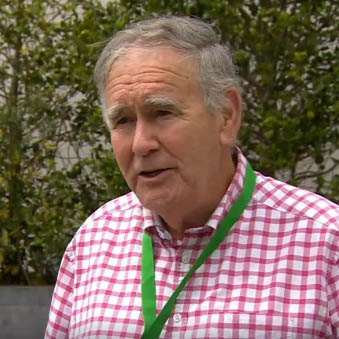 Anthony Neville
I approached the National Synodal Assembly with great hope but with a little trepidation after the disappointment of the Pre-Assembly in Kilkenny in 2025 and the concern expressed by some that the bishops would seek to control the outcome.
The event was attended by almost 300 people including 23 bishops, 53 priests, 8 deacons and 17 religious sisters. The laity were represented by delegates from each diocese and by lay movements such as ourselves, the Association of Catholics in Ireland. We were represented by three delegates: Patricia Fitzsimons, Edel O’Dea and myself, Anthony Neville. It was well organised and controlled to get through the 35 proposals on the agenda. We were seated at tables of 8 including a facilitator. At my table there was a bishop, a priest, a sister and five lay delegates, with a gender balance.
The meeting in Kilkenny in 2025 had identified seven priorities as the principal areas in which the convergences of the synodal process invited us to respond.
- Belonging
- Co-responsibility and Lay Ministry
- Family
- Formation and Catechesis
- Healing
- Women
- Youth
Seven Working Groups were formed to prepare proposals around these themes. Unfortunately the timetable for this element of the process ran into problems and the working groups complained of insufficient time for their deliberations. The National Synodal Team then took the recommendations and proposed five Pathways towards the realisation of the emerging vision of the Church in Ireland. Each Pathway contained a number of proposals. The five Pathways:
Pathway 1: The Church that Proclaims the Gospel.
The Church exists to announce the Gospel of Jesus Christ, for mission belongs to its very nature. The Church is a mission.
Pathway 2: The Church as a Community of Belonging:
The Church seeks to be a community for all to whom she has given birth in the waters of Baptism.
Pathway 3: The Church as a Place of Healing:
The need for healing and reconciliation within the Church recognised in response to the hurt and trauma carried by so many because of the crimes and abuse that are now an undeniable part of our story.
Pathway 4: The Church that Accompanies:
Over the course of the Irish Synodal Pathway, a clear longing emerged for a Church that accompanies people along the path of life and faith.
Pathway 5: The Church that Empowers for Ministry and Co-responsibility:
The Church has always held that Baptism bestows both dignity and responsibility. Each baptised person is a child of God and is called to share in the life and mission of the Church.
The procedure for the day was that each Pathway was started with a prayer, followed by an 800 word introduction. Each table was then given 20 minutes to discuss the individual proposal. Then delegates who wished to speak on the proposal were given one minute to speak from the podium. Following this we recorded our view using keypads, with the option of ‘Highly recommend it’, ‘Recommend it’, ‘Considers that it needs further discernment’, or ‘Does not recommend it’. The procedure worked well and meant we could get through the ambitious total of 35 proposals allowing time for coffee breaks and lunch.
Of the 35 proposals, 32 achieved a highly recommended plus recommended score of over 50%. Only 3 proposals failed to reach the 50% level. I was surprised that so many reached the over 50% level.
Highlights:
Pathway 1. The Church that Proclaims the Gospel
Total 8 proposals.
- Proposal 4. Developing the parish/local faith community as a faith formation space – combined 88%.
- Proposal 8. Engaging with Irish society in discerning the common good – combined 85%.
- Proposal 5. Youth co-ordinators and youth advisory committees – combined 84%.
- Proposal 6. Establish pathways of intentional discipleship for youth – combined 83%.
Pathway 2. The Church as a Community of Belonging
Total 6 proposals.
- Proposal 3. Pathways of belonging for young people through pilgrimages and gatherings – combined 88%.
- Proposal 1. A ministry of listening, welcoming and belonging in dioceses / parishes – combined 74%.
- Proposal 5. Women visible and valued in liturgy, public prayer and discourse of faith – combined 61%.
Pathway 3. The Church as a Place of Healing
Total 4 proposals. Our delegate Patricia spoke on the importance of healing and recommended that a prayer for healing of the abuse in the Church be included in liturgies, particularly weddings, funerals and christenings where people would be there who would not usually attend church.
- Proposal 1. Healing as a priority in the future work of the synodal process – combined 89%
- Proposal 2. A commission for healing – combined 64%.
- Proposal 4. The pastoral care of women at the margins – combined 52%.
Pathway 4. The Church that Accompanies
7 proposals.
- Proposal 1. Cultivating communities of accompaniment, discipleship and belonging – combined 85%.
- Proposal 2. Review of catechetical provision and sacramental preparation – combined 84%.
- Proposal 3. Nurturing the domestic church: home-based faith tools – 76%.
- Proposal 6. Pastoral accompaniment in relationship brokenness – combined 70%.
Pathway 5. The Church that Empowers for Ministry and Co-responsibility
10 proposals.
[I spoke and stressed the importance of this Pathway for lay ministry and co-responsibility, without it all the work for today will be in vain. I referenced the ACI campaign of many years on Lumen Gentium, the Vatican II Dogmatic Constitution for the Church. I urged support for the proposals particularly Proposal 2 which called for ongoing episcopal and priestly formation. I finished by posing a question to the bishops “why are there still many parishes who know nothing about this event today?”]
- Proposal 3. Ministry of Catechist, instituted and commissioned – combined 91%.
- Proposal 2. Formation of all (ordained and lay) for co-responsible ministry in a synodal Church – combined 85%.
- Proposal 10. National formation and training pathway for youth and young adults – combined 84%.
- Proposal 7. National office for life-long adult faith formation – combined 83%.
- Proposal 5. Recognition of lay ministry and co-responsible leadership for lay women and men – combined 76%.
The three proposals that failed to reach a combined score of over 50% were:
- Pathway 2 Proposal 2. National commission for faith-based social infracture and abiding – combined 46%.
- Pathway 4 Proposal 7. Women and the domestic church – combined 40%.
- Pathway 2 Proposal 6. National office for women – combined 18%.
Many women remember the Women’s Forum of 2017-18 that worked for some time preparing proposals for the Bishop’s Conference, which met with no response. Members of the 2026 women’s working group did not want an office for women: there was no office for men and women wanted equality of treatment. The Working Group on Women requested more time to develop their proposals but this was not granted. The impression gained at the Assembly was that the Group was seeking an ombudsperson to oversee all developments in the involvement and treatment of women.
I was disgusted at the RTE Radio news which only mentioned the failure of the National Women’s Council proposal but failed to mention the 32 proposals which had received support.
Conclusion
After five years of meetings in person and on Zoom, discussions, and submission of syntheses to the Synod in Rome and the National Pathway, it was encouraging to be present at such a well organised event. There was a Working Document of 72 pages to be studied in advance, with 35 proposals to be familiarised with. I saw in the synodal process a means by which the mission of the Church can be advanced by strengthening communion among all the baptised and broadening participation in proclamation and witness. The People of God, which includes the bishops and clergy, can sit down and discern what God is asking of us for the Church in Ireland today.
The people at my table appeared to have done the homework, were familiar with the proposals and had good points to offer the discussions. However I did hear comments that some delegates did not seem familiar with proposals. It was encouraging that faith formation for all levels was strongly supported, with a Ministry of Catechist and the importance of home-based faith identified. Healing was a priority with a commission for healing proposed. The role of women in the Church featured in many proposals which received strong support despite the National Council being rejected. Ongoing exploration of women’s ministry, including the diaconate, was supported. Particularly significant was the proposal for a national review in the light of paragraph 60 of the Final Document of the Synod on Synodality which calls for full implementation of opportunities already provided in Canon Law regarding women and states that the question of women’s access to diaconal ministry remains open and discernment should continue.
Of particular importance to myself and the ACI was Pathway 5 on Lay Ministry and Co-responsibility. I was surprised and disappointed that the introduction to this Pathway was read by a bishop! All of the proposals of the Working Group were included in the Working Document and recommended. The most widely recommended on the day was for a Ministry of Catechist to offer on-going invitation to people at all stages of life to grow in faith within their local communities of faith. Mandatory parish and diocesan pastoral councils were called for but must be effective and not box-ticking. Formation of all the baptised alongside ongoing episcopal and priestly formation for co-responsible ministry in a synodal Church was also one of the most highly recommended proposals. Formation for youth and young adults was strongly recommended, as was a national office for life-long adult faith formation.
The recommendations on the proposals now go to the Irish bishops for their consideration and further discernment. I worry how the bishops will respond to 32 recommended proposals coming at them. Eamon Martin, Archbishop of Armagh, said at the closing remarks that it may take a 3, 5 or 7 year timeframe to see the result of the day. These different outcomes are all part of an authentic synodal process. Discernment does not end with this Assembly, and matters requiring further reflection remain part of our continuing journey together.
I was grateful to have been there and pleased that the ACI is seen as having had an important contribution to the synodal journey over the past five years. I am very concerned at the lack of knowledge at parish level and the lack of engagement by many clergy in the synodal journey.
~
Edel O’Dea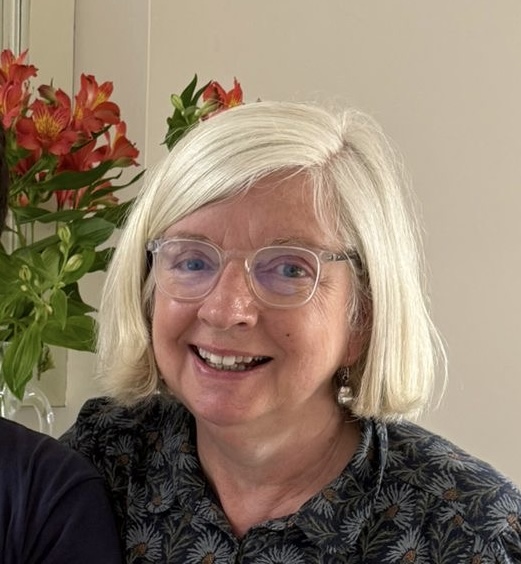
INTRODUCTION
Why am I doing this?
“It won’t happen in my lifetime” is a mantra that for decades has expressed the resignation that so many Catholics have felt about their wish for change in their church. The National Synodal Assembly has offered hope to me that if I live long enough, that mantra may become redundant.
To appreciate fully the significance of the National Synodal Assembly and the privilege of being a delegate, I need to revisit the year 2012, a bleak time in recent Church history. This was the year the CDF autocratically censured Fr Tony Flannery, the late Fr Sean Fagan and other progressive priests for expressing their authentic views on the need for change in aspects of Church teaching.
At the time, my Catholic identity became very frail, I was feeling both despondent and angry.
In desperation, I wrote to then Archbishop Diarmuid Martin (regarded as progressive), appealing to him to speak out and reassure those deeply conflicted Catholics like me, who were hanging on by a thread or walking away from what we experienced as an oppressively authoritarian Church. I didn’t expect to hear back from Archbishop Martin who may have felt constrained by his role. I did however, hear from a former Parish Priest who didn’t hesitate to express his own frustration and describe it as a very dark time for the Catholic Church.
As I struggled to ‘show up’ in those days, I could hear a quiet prayer running somewhere in the background for a brave new leader to emerge in the Church who would bring hope.
Thankfully, as the beautiful Leonard Cohen ballad ‘Anthem’ proclaims, ‘There is a crack in everything, that’s how the light gets in’, and in spring 2013 Pope Francis duly emerged and his papacy prised open the cracks in the church to allow light to gradually flood back in, reinvigorating the spirit of Pope John XXIII, the aspirations of the Second Vatican Council – allowing the Holy Spirit to do her job.
My identity as Catholic was bolstered whenever I heard Pope Frances and now Pope Leo speak so truthfully and coherently about Catholic social justice teaching and the dignity of the human person, in the context of global events. On the flip side, my identity as a Catholic has felt very fragile when reminded how the Church itself can be an oppressive and unwelcome place for the many people who see a core aspect of their identity diminished by the Church.
My motivation in joining the ACI was to find community among others who seek to dismantle internal barriers and catechetical blind spots that make our Church seem irrelevant, harsh and off-putting to so many, and thereby enable the Church, as intended by Jesus, to shine its light brightly as a beacon of hope, justice and goodwill in our world today.
When I arrived at the City North Hotel on Saturday, 17th October, it was in the context of the bleak memory of 2012 and my wish for a Church that throws open its doors widely to truly welcome everyone, that I experienced a palpable sense of joy, celebration and gratitude to be a witness to this great occasion as one of three delegates for the ACI. This was to be a space for conversations, listening, discernment and vote casting around the proposals set out in the extensive and considered Working Document “Is not this what God asks of you?” that informed this assembly.
THE WORKING DOCUMENT AND THE CENTRAL PRIORITY FOR ME
I arrived in Gormanston, having read, with an open heart, the Working Document for the Assembly and the seven reports of the Working Groups. I had already found hope in much of the content and proposals which acknowledged many of my concerns and aspirations for the Church in Ireland and the reservations expressed by the brave priests who suffered deeply in 2012 and thereafter.
What brought me the greatest hope was the comprehensive and thoughtful Report of the Working Group on ‘Healing’. While the recommendations of this group made it into Pathway 3 of the Working Document, the scope, spirit and intentions expressed in the report of the working group could not be captured fully in the texts of Pathway 3.
The members of this group had grasped and described convincingly the centrality of healing to the synodal journey and ongoing renewal of the Church in Ireland. They also grasped the complexity of what they were tasked with, avoiding pitfalls that could have made for a report on healing that came across as patronizing and arrogant to a survivor of any of the many forms of abuse. While making their recommendations, the authors acknowledged how much we don’t know and how much more research and learning are needed to create a Church that intentionally and visibly has ‘healing’ at its heart.
They recognised, for example, that ‘there are many groups within the Church in need of healing who have not been adequately recognised.’
The need for the Church to heal its relationship with LGBTQI+ members was specifically acknowledged in this working group’s report, and in this instance with no conditions set by way of subtle provisos. This is essential to allow healing to take place in a church whose catechism diminishes all LGBTQI+ people and sets harsh boundaries for our LGBTQI+ members who struggle to experience ‘belonging’ in the Church.
The strong desire expressed in the Healing Pathway for safe and what are indeed “sacred” spaces of deep listening and encounter was also expressed in other pathways. The practice of deep and attentive listening, with an open and humble heart to any person generously willing to share their experience of oppression, exclusion and abuse of any form, can change hearts, soften rigid mindsets, and disarm what Pope Francis once described as theoretical condemnations, legalism and clerical moralism.
For me, all aspirations for renewal of the Church in Ireland, documented in the four other pathways, are secondary to creating a visibly humble and healing culture in a Church that truly hears the sadness, anger, and pain of wounded members and from individuals who are no longer affiliated to the Church, without setting conditions and judging.
SITTING AROUND A TABLE – INTENTIONALLY ENLARGING THE TENT
Just before 9.30 am, I took my place at my designated table of eight delegates, all previously unknown to me. We quickly became familiar with the rhythms of the proceedings, listened to a presentation on a pathway and shared among our group some thoughts and responses that pathway and proposals elicited in us. We then listened to delegates who wished to speak for one minute to the entire attendance, followed by guided and also some quiet prayer. We then cast our votes (anonymously) with the assistance of technology, along with all 300 delegates on a rating scale of 1-4 representing whether:
- we highly recommended a proposal
- recommended a proposal
- thought the proposal needed further discernment
- didn’t recommend the proposal
As our group shared our perspectives on the pathways, there was mostly convergence and support expressed for the least contentious proposals. Then, some divergence emerged around more predictably contentious proposals, such as those related to women. It was interesting that it was women rather than men who were confounded by what they saw as an over-emphasis on women’s issues in the pathways and proposals, some explaining that they had a satisfactory experience as women in the Church.
I hesitated before speaking about my own experience as a Catholic woman, conscious that I was probably an outlier. I shared how I feel a recurring sense of sadness and sometimes oppression at mass wherever I go in the world, because of the universal absence of women’s voices proclaiming the gospel and sharing a female perspective and wisdom in the homily – my hope being, that extending the diaconate to women will enrichen all our experience by ensuring that women can join those men who by virtue of their ordination to the diaconate already participate regularly in proclaiming and interpreting the gospel during the Liturgy of the Word.
When we came to the ‘Healing Pathway’, there was a view expressed and supported by other delegates that the Church and especially priests have already apologised often enough for abuse which they didn’t perpetrate personally. I understand this perspective and would have needed more than a few minutes to consider how to respond empathetically, respectfully and meaningfully while sharing another approach.
Hearing this view expressed, however, brought home to me the enormous burden that non-offending priests (the majority of our priests) have shouldered. This triggered the stark realisation that priests are among the groups in our Church who are rarely properly acknowledged as in need of healing – healing for having endured mis-directed hostility as a legacy of the abuse crisis; perhaps healing for priests who have been unable to remain in the ministry they felt called to for life because they missed the life-giving relationship and tenderness of marriage; healing for those priests who have remained in ministry at the cost of experiencing significant loneliness, and healing for all other forms of woundedness among priests that only they can know and name.
Healing may also be needed in our Church for the priests who have been over-burdened by a model of priesthood that has traditionally fostered an unconscious ‘clericalism’ among both lay and ordained; a priesthood that needs to be reimagined to become more life-giving for priests themselves and to foster a truly co-responsible church that celebrates the common priesthood of all the baptised and the expansive and equal love we are all held in by our creator.
The ‘round table’ experience consolidated for me, the importance of ongoing opportunities at all levels in our Church for listening attentively (for more than a couple of minutes) to each other’s stories and perspectives.
We are all formed differently as human beings by our genetic predispositions, life experiences, cultural, educational and many other influences which together shape our thinking styles and attitudes towards the Church and its catechism. In such a colossal institution as the Catholic Church, I appreciate that synodality is about learning to walk together, acknowledging both our commonalities and differences, while holding the inevitable tension that will arise with understanding and grace.
Rather than ‘silencing’ dissenting voices as happened in 2012, we need ongoing respectful, visible and open spaces for listening and sharing all perspectives within the Church. In ‘synodal speak’ we need to ‘enlarge the tent’ not least, so that those people who have experienced exclusion or have walked away disillusioned from the Church, can see themselves represented by those of us who take up our space within the Church and challenge teachings that diminish the human dignity not only of those they directly affect but all our humanity. Such representation is essential to create a Church where we can all experience belonging.
Indeed, at the Synodal Assembly, I was surprised and thankful for the strong voices that emerged at the podium, speaking urgently for their allotted minute, and reassuring me that there were other ‘outliers’ in the room.
THE VOTES AND PRESS COVERAGE
The voting pattern was quite predictable, with the strongest endorsement for proposals that addressed the crisis in ‘passing on the faith’ to younger generations and adult faith formation, along with strong endorsements for the proposals that prioritised Healing and those which progressed a culture of co-responsibility.
The voting on some of the proposals related to women appeared more divided, but there was an explanation for this.
- The proposal on ‘Women in the Domestic Church’, ( pathway 4 proposal 7): while appreciating the intention of valuing the home as a primary space for living out and inspiring faith, the wording of the proposal was understood by many including myself to represent a narrow view of family and to ignore the role of men as carers in the home. The question was asked by many why men were not included. This proposal received a combined total of 40% recommendations and a strong call for further discernment.
- The proposal on creating a National Office for Women (pathway 2 proposal 6) was heavily defeated, this can be explained by a misunderstanding and the inclusion of this proposal, inadvertently, which was explained to us before the voting by a member of the working group on women.
It was very unfortunate that the RTE news zoned in on this specific vote without acknowledging more encouraging results for other proposals on women.
Other significant proposals on women all received over 50% endorsement, including a proposal for ‘Ongoing Exploration of Women’s Ministry, Including the Diaconate’ (pathway 5 proposal 9) with only 27% not recommending this proposal.
Fortunately, journalist, Patsy McGarry’s article on the Synod Assembly in the I.T. had a more hopeful headline.‘ Landmark Irish Catholic assembly backs further discussion on women’s ordination’
IN CONCLUSION
My personal experience of religious belief as a cradle Catholic growing up in 1960’s and 70’s Ireland, has been an often wavering journey with lots of questioning along the way. My understanding of God and how I pray has expanded to integrate coherently with evidence-based scientific disciplines, that investigate our complex human experience and the extraordinary biodiversity of our ecosystem.
I’m grateful to have a sense of accompaniment by an expansively loving divine presence that can show up in surprising and sometimes humorous little ways to reassure me at times of transition in my life. Whenever I have ongoing questions and doubts about the reality of God, my God understands this and appreciates what it is like to be human, with all that goes with having an enquiring human brain!
Like those of my peers who still hold on to a sometimes-fragile faith, my faith continues to bring hope, informs my values and the choices I make, so I can try to live justly in community with family and all those who share this planet. I am always conscious that my agnostic, atheist and humanist family members, peers and friends, along with those from other faith communities, share similar values to mine and strive to live justly. I know that the God who loves me already loves them also.
Today, I have a quiet prayer running in the background that someday my peers, family members, and all those who no longer engage with the Church, will notice a renewed Catholic Church that places the life-giving Gospel message of healing, social justice, and outreach at its centre. Perhaps someday, with gentle curiosity, they may investigate further and be surprised by the ‘Amazing Grace’ that is the God who is already accompanying them throughout their lives.
Finally, I acknowledge the frustration and disappointment many Catholics may feel about issues close to their heart that were omitted for consideration at this Assembly.
The ball is now in the Bishops’ court. My hope is that they will prioritise a Healing Pathway, which may be realised thoughtfully with the support of AMRI, and which will become a catalyst for changes of heart and the dismantling of barriers that can preclude so many people from experiencing the transformative love of a universal God within the institution of the Catholic Church.
The ongoing process of Synodality and the National Synodal Assembly brings me hope that I may see this happen in my lifetime!
0 Comments