St John Henry Newman – 38th Doctor of the Church
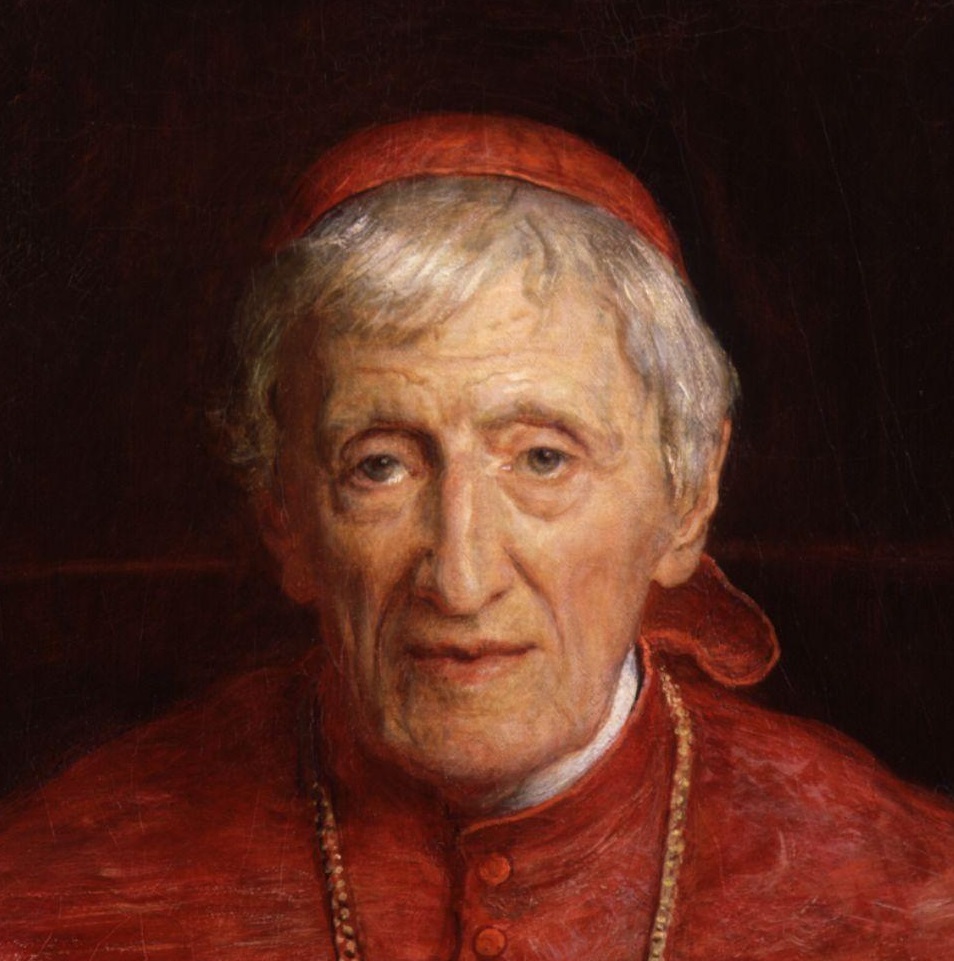
On 31st July 2025 Pope Leo XVI issued a statement approving the decision to declare St John Henry (Cardinal) Newman the 38th doctor in the history of the church. This places the English saint alongside such ‘greats’ as St Augustine of Hippo, St Thomas Aquinas and St Teresa of Avila.
Newman’s thought – especially his insistence on the authority of conscience – had major influence on Vatican II. In a famous letter to the Duke of Norfolk in 1875 Newman wrote:
“Conscience is not a long-sighted selfishness, nor a desire to be consistent with oneself; but it is a messenger from Him, who, both in nature and in grace, speaks to us behind a veil, and teaches and rules us by His representatives. Conscience is the aboriginal Vicar of Christ, a prophet in its informations, a monarch in its peremptoriness, a priest in its blessings and anathemas, and, even though the eternal priesthood throughout the Church could cease to be, in it the sacerdotal principle would remain and would have a sway.”
He finished that letter by writing:
“Certainly, if I am obliged to bring religion into after-dinner toasts, (which indeed does not seem quite the thing) I shall drink—to the Pope, if you please,—still, to Conscience first, and to the Pope afterwards.”
This principle of the primacy of conscience came to have special significance in the church in the wake of revelations of clerical sexual abuse of children from c. 1985, beginning in the USA – abuse that was then typically maladministered through concealment of its existence from the people of God. The global shock that resulted eventually led Pope Francis to issue the apostolic letter Vos Estis Lux Mundi in 2019. This requires all priests and religious to report abuse and cover-ups to Church authorities. This law applies globally and includes protections for whistleblowers.
With his 1859 essay “On Consulting the Faithful in Matters of Doctrine” Newman stated a poition that greatly influenced Vatican II on the role of lay people in the church. Newman argued that the Holy Spirit is not confined to the hierarchy but is present among all the baptized. He cited St. Hilary: “The ears of the people are holier than the hearts of the bishops.”
The German Lutheran pacifist Sophie Scholl was also influenced by Newman’s writings on conscience – in the wake of the rise of Nazism in the 1930s. At the age of twenty-one Sophie suffered a martyr’s death, alongside her brother Hans, for peacefully protesting Hitler’s war on Russia – on February 22nd, 1943 – the ‘White Rose’ protest.
Newman could be called an Irish saint too – for his years spent in Ireland 1851-58 attempting to establish a Catholic University. This left a permanent legacy in his book ‘The Idea of a University‘ and the building of University Church on St Stephen’s Green.
The Irish author James Joyce was also greatly influenced by Newman’s writings. In Portrait of the Artist Joyce’s main character Stephen Dedalus refers to Newman as ‘the greatest literary writer’.
The saint’s belief in the compatibility of faith and reason also had major influence on the thinking of Pope Benedict XVI – who beatified Newman in 2010 on a visit to the UK, calling him:
“A great Englishman, a great European, a great Christian thinker.”
[This article was edited on 4th August 2025 to include reference to Newman’s famous essay ‘On Consulting the Faithtful in Matters of Doctrine’ of 1859.]
0 Comments