“We should, therefore, look to the Gospels to outline for us the journey of conversion we are required to undertake, learning little by little to make Jesus’ practices our own.”
This is just one of twenty-four references to ‘conversion’ in the Final Report of the 16th Synod on Synodality. Called to conversion by the Holy Spirit, we learn that the whole church is now to undertake a continuous conversion of relationships, of processes and of bonds.
But if ‘conversion’ is something that happens whenever we ‘undertake’ it, how come the bishops of the church were not converted to effective child protection in the church until – beginning about 1985 – victims of childhood clerical abuse – aided by secular police, lawyers, courts and media – showed us that instead bishops globally were endangering children by hiding the problem – and that this was standard procedure, mandated by the church at the highest level?
The fact that the magisterial church was converted to child protection – and then to synodality – only by this totally unexpected public relations disaster is nowhere acknowledged in this final report of the 16th Synod of 2024 – and this alone tells us that the magisterial church still has ‘ways to go’ on the conversion journey if it is to lead the rest of us convincingly.
Charged now with understanding ‘Mission’ and ‘Adult Faith Formation’, every diocese in Ireland would be wise to ask what exactly went wrong with the faith formation model we inherited.
The Great Mistake
Would we not be wise to consider the possibility that the root of the problem was a tendency to think of adult Christian faith as programmable to begin with – never questioning that schooling and seminary training, topped by the sacrament of ordination, would signify complete Christian conversion?
That these might well signify merely conversion to Catholic institutional careerism and conformity – as revealed by the disasters still ongoing – has still not been acknowledged by that same institution.
Was any great saint of the church ever converted to their mature adult faith by any formal faith formation programme, beginning in childhood? Peter, to begin with, spent three whole years with the greatest teacher ever – and was then fully converted only by the humiliating experience of his own tragic weakness when faced with the hostile crowd, and then Jesus’ forgiveness. Paul was converted – we are told – by the shocking intervention of the Lord himself, from Heaven, on the road to Damascus to root out the Christians there.
Augustine of Hippo in the late 4th century had to confront the reality of his own adult dissolution and confusion before faith could truly set in. Patrick of Ireland was converted by an entirely unplanned experience of kidnapping and slavery, while Columba of Ulster had to experience the violence caused by his own ecclesiastical ambition and rivalry with St Finnian.

Pope Francis – also transformed by adult failure
Isn’t there a discernible pattern in all of these stories – of mature adult Christian faith arising out of unexpected humiliation rather than any early deliberate early life formation programme? Didn’t that pattern hold true for Francis of Assisi, Ignatius of Loyola, Alphonsus Liguori, Therese of Lisieux, Maximilian Kolbe, Franz Jagerstatter – and Pope Francis?
Doesn’t the entire history of the church – underlined now especially by the hierarchical disaster we are undergoing – tell us that the deepest Christian faith is arrived at only by the unplanned experience of personal life crisis and powerlessness – the necessary downfall of youthful egotism – not by any faith formation programme received in relative tranquillity?
Didn’t Pope Francis put this best: “There is no humility without humiliation!”
Ordination is Not Conversion
If the church had always understood and taught this – that faith formation is always tested – and completed – ONLY by unwanted and unplannable adult setback – and that ordination and conversion are NOT the same thing – would there ever have been even a reason for secrecy over clerical child sexual abuse?
Was it not the vain belief that faith can be fully formed by school and seminary programmes that led to the mystique of clergy – the clericalism – that produced Crimen Sollicitationis in 1962 – the binding of all Catholic bishops to strict secrecy on clerical sexual abuse of minors?
This is not to argue that we do not need formation and early sacraments: both are essential if we are to interpret correctly the meaning of adult setback. The mistake is to believe that conversion is achieved if we simply ‘undertake’ it – and then complete the set course.
If there is indeed no humility without humiliation isn’t that also the explanation of the church catastrophe we are living through? Don’t we now need this insight – this warning – to be woven deeply into all of our formation programmes, to counteract the pride and naivety that can all too easily result from simply completing the programme?
Shouldn’t the church already be teaching us, explicitly, that formation and ordination are not conversion?
The Pattern of Spiritual Development
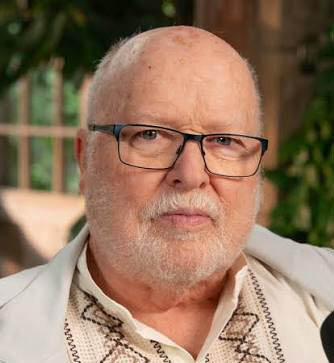
Richard Rohr OFM
For decades the contemplative Richard Rohr OFM has been teaching of the necessary experience of suffering to take us from the first half of life into the second. He defines suffering as a deep experience of complete powerlessness. Don’t we now need to understand this as humiliation, the necessary adult downfall of early egotism that cannot be programmed?
It isn’t only the church that is undergoing humiliation just now. So is the secular enlightenment, confronted by the environmental consequences of three centuries of exploitation of fossil fuel energy, as well as the real danger of nuclear self-annihilation. Hubris still counsels an onward march to ‘artificial intelligence’ but wisdom warns that pride always comes before a fall – and that the true future of humankind will be arrived at only by humiliation – and humility – first of all.
There is no escaping the disaster course that youthful pride and egotism always have in store for us humans, so how did the Catholic magisterium come to publish in 2011 a Youth Catechism – YouCat – which did not even index that word ‘pride’, giving copious examples? Will we ever hear this explained in homilies on Jesus’ question about the beam in one’s own eye that leads us to complain about the motes in the eyes of others?
Nothing could be clearer than the truth of Lord John Acton’s pithy sentence of 1887, in a letter insisting that even bishops and popes could be corrupted by power. “There is no worse heresy than that the office sanctifies the holder of it.”
We are surely being trained – by the humiliation of the church – to see humbled pride as the pattern of historical human development also. Ongoing ecclesiastical and secular failures are the indispensable God-given formation and conversion course that we could never ourselves have planned.
Sean O’Conaill
12th July, 2026
0 Comments